Course description
This virtual training provides an overview of how viral and bacterial pathogens undergo antigenic evolution, potentially leading to immune escape and reduced effectiveness of prophylaxis and treatment. With case studies and real-world examples, it highlights the critical role of continuous genomic surveillance, alongside the need to research and develop novel immunisation and neutralisation strategies to sustain effective pathogen control.
Target audience
Public health microbiologists, epidemiologists, or bioinformaticians interested in learning about antigen evolution and novel immunisation strategies.
Format
This virtual training consists of two half-day sessions held in the mornings of Monday 23 March and Wednesday 25 March, from 09:00 AM to 12:30 PM (CET).
Outline
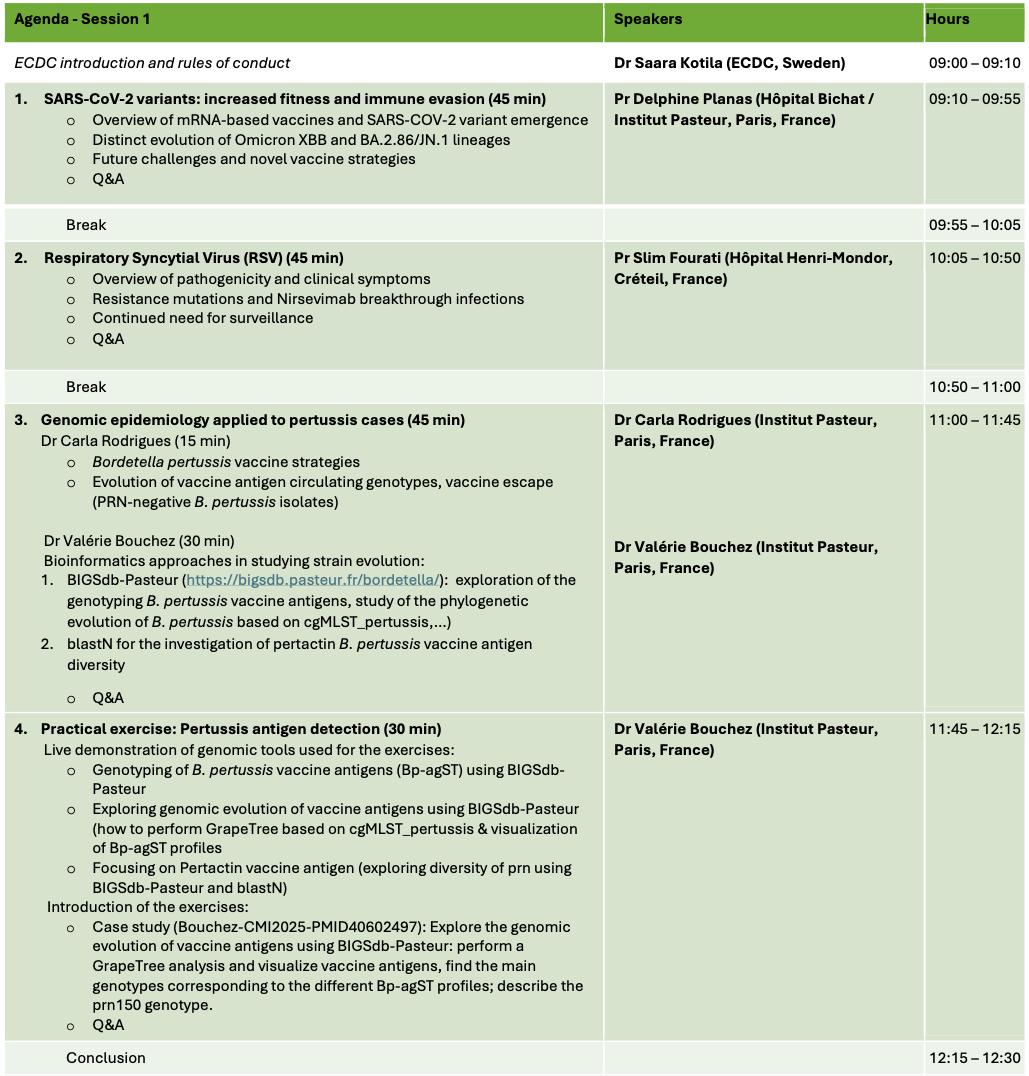
Session 1: Antigen evolution, from viruses to bacteria
Part 1: SARS-CoV-2 variants: increased fitness and immune evasion
Part 2: Respiratory Syncytial Virus (RSV)
Part 3: Genomic epidemiology applied to pertussis cases
Part 4: Pertussis antigen detection (practical)
Session 2: Bacterial antigen evolution and pandemic preparedness
Part 1: Case study discussion (practical)
Part 2: Streptococcus pneumoniae: vaccine strategies and antigenic variation
Part 3: Neisseria meningiditis: virulence, immune evasion and cross-reactivity
Part 4: Future directions: AI in pandemic preparedness and vaccines development